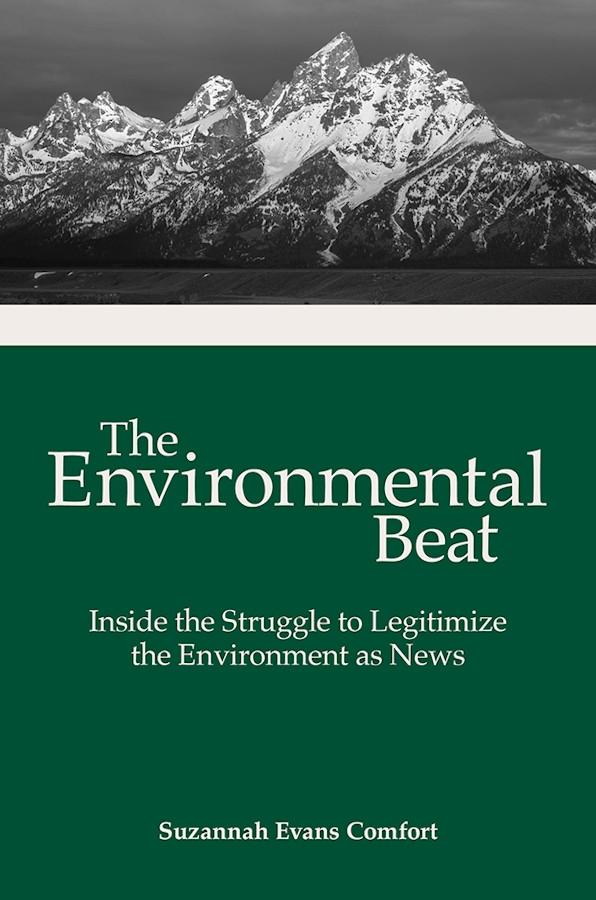

It isn’t like other beats.
Here’s a few examples of unusual or perhaps unexpected things about environmental journalism that are explored in The Environmental Beat.
- Opinion writers and columnists were the first environmental journalists, covering issues of conservation from the sports pages from the late 19th century until environmental newsmaking became mainstream in the 1960s. Then, as now, personality-forward journalists advocating a point of view were hugely popular. This style of journalism has the ongoing potential to be appealing and accessible to audiences swamped with content today.
- Environmental journalists are often among the first positions cut when news organizations contract. Managers justify the decision by saying environment is a topic relevant to all beats, and so any journalist can and will cover environmental issues. In practice, this rarely works. Environmental reporting requires specialist skill- and source network-building.
- Audiences want environmental news but find it increasingly hard to access. A multi-country study from the Reuters Institute for the Study of Journalism found that people are much more likely to express interest in environmental news than they are to encounter it in their daily life.
- According to a Pew Research Center survey, about eight percent of U.S. journalists report covering the environment as one of their top three topics. This is fewer than 900 journalists nationwide – a very small number of people to provide the coverage that so many Americans want.
- Environmental journalism is much more likely to be produced by niche, nonprofit news organizations than mainstream commercial news outlets. Nearly half of the top 100 largest news organizations that are members of the Institute for Nonprofit News have an environmental focus.
- The peak of mainstream news attention to the environment occurred during the Nixon Administration, when environmental issues were more commonly discussed in newspaper editorials than the economy or the Vietnam War. Since then, mainstream news attention to the environment has been highly variable; after an increase in the volume of climate journalism over the last decade, we may be seeing yet another decline in coverage.
Still, if the past is any guide, this rollercoaster will continue with another surge of news organization investment followed by another retreat.